Renting in London Before Buying: A Considered Approach
Renting in London before buying rewards those who approach it with intention.
Its neighbourhoods each have their own character, its property market is layered in ways that take time to understand, and the range of homes available at any given moment, including homes that are not widely marketed, is broader than most searches reveal.
For a particular kind of buyer, renting in London before buying is a deliberate and well-considered first step. It suits those arriving from overseas on assignment, returning expatriates who want to reacquaint themselves with a city that has shifted since they were last based here, and buyers who are weighing two or three areas seriously and want the confidence that comes from having lived in their preferred location, not merely visited it.
This guide is written for that potential buyer: someone for whom the rental period is not a holding pattern but an active, purposeful part of the journey toward owning the right home in the right part of London.

Who renting in London before buying suits best
London’s neighbourhoods are deeply individual in character. Marylebone has a different cadence from Notting Hill. Fulham feels different from Islington. And within each area, individual streets, buildings, and aspects vary in ways that matter enormously to how a home feels to live in day to day. For buyers who want certainty before they commit, spending time as a resident rather than a visitor is the most reliable way to develop that understanding.
For buyers arriving from the Middle East, America, East Asia, or Australia, the case for renting in London before buying is particularly compelling. Coming to the capital with a clear budget but limited local knowledge is a common situation, and the prime London market rewards those who take time to understand it properly.
Returning expatriates face a version of the same opportunity. London changes, and areas evolve in character over years. A rental period is the most efficient way to reacquaint yourself with what a neighbourhood is like to live in now, rather than relying on memories of how it was.
How much does it cost to rent in London?
London’s rental market covers an enormous range, from modest one-bedroom flats in outer boroughs to substantial family houses in prime central postcodes. The cost of renting reflects that range precisely.
At the prime central end, covering Mayfair, Belgravia, Knightsbridge, Chelsea, and parts of Kensington, rental values are determined by a combination of address, floor level, finish, and the quality of the building’s management.
Properties here attract a global pool of tenants and are priced accordingly. Space comes at a premium, and the gap between what a given budget will secure in Zone 1 versus Zone 2 is considerable.
Inner London, covering Fulham, Marylebone, Notting Hill, Islington, Hampstead and Chiswick, offers strong value at a step below prime central pricing, and for many renters this represents the most sensible balance between location, space, and affordability. Family houses with gardens become a realistic option. Catchment areas for well-regarded state schools begin to matter in the decision.
Outer London broadens the offer further, with larger properties, more generous outdoor space, and better value for square footage, offset by longer commutes and a more suburban character that suits some buyers very well and others not at all. The rental period, again, is the most reliable way to discover which category you fall into.
The upfront costs of renting in London
Beyond the monthly rent itself, the upfront costs of renting in London before buying are worth understanding. In England, the deposit cap is usually five weeks’ rent, rising to six weeks in some higher-rent cases. Landlords cannot ask for, encourage or accept rent before the tenancy agreement is signed, and after signing and before the tenancy starts, they can ask for a maximum of one month’s rent in advance.
Council tax, utility bills, and contents insurance add to the ongoing monthly commitment. For furnished properties, the calculation is straightforward; for unfurnished rentals, factor in the cost of equipping a home that may only be yours for twelve to twenty-four months.
The best areas for renting in London before buying
Where you choose to rent should, wherever possible, reflect where you are seriously considering buying. The whole purpose of the strategy is to test the reality of a neighbourhood before committing capital to it.

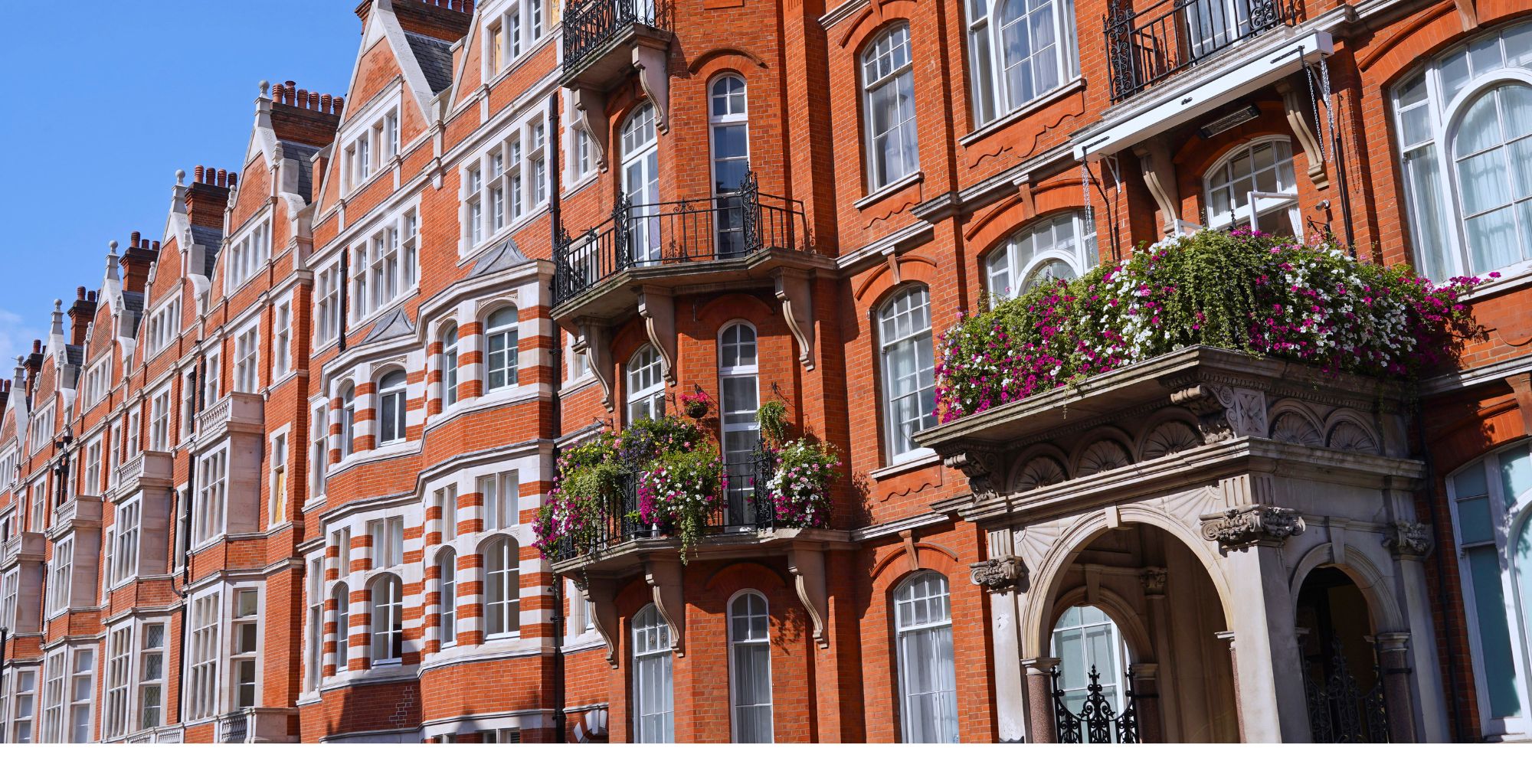
Prime central London, covering Kensington, Chelsea, Mayfair, Belgravia, Knightsbridge, and South Kensington, suits buyers drawn to the prestige of a central address, proximity to international schools such as the Lycée Français and a cluster of well-regarded prep schools, and the convenience of being walkable to the cultural and commercial heart of the city. The architecture here is largely period, with mansion blocks, stucco-fronted terraces, and garden squares that have defined London’s most desirable residential identity for over a century.
Marylebone and Fitzrovia offer a village character that surprises first-time visitors. The high street, the independent shops, the quiet garden squares to the north, and the easy walk to Regent’s Park have made this one of London’s most sought-after rental and purchase areas for professionals and families alike.
Notting Hill and Holland Park attract buyers who want the energy of Portobello Road alongside large lateral apartments and exceptional houses. The weekend character of the area is distinct from the weekday commuter rhythm, and experiencing both is exactly the kind of knowledge that renting in London before buying delivers.
Fulham and Chiswick are consistent choices for families with children, offering strong state and independent school options, riverside access, and a residential feel that sits comfortably alongside good transport connections into central London.
Islington and Hampstead appeal to buyers who prioritise cultural life, excellent restaurants, and a strong sense of neighbourhood identity. Both areas have active property markets and a housing stock that ranges from Georgian terraces and Victorian villas to well-specified modern apartments.
Further afield: King’s Cross, Bloomsbury, Richmond and Kew
King’s Cross and Bloomsbury have become increasingly attractive to buyers who want central London convenience without the formality of some of the capital’s traditional prime neighbourhoods. Together they offer a compelling blend of historic architecture, cultural institutions, and excellent transport connections, making them particularly popular with professionals, academics, and international buyers.
King’s Cross has undergone a significant regeneration programme over the past two decades.
The area now combines contemporary residential developments with restored Victorian buildings, alongside an outstanding selection of restaurants, cafés, and public spaces centred around Coal Drops Yard and Granary Square. With six Underground lines, national rail services, and Eurostar connections from nearby St Pancras International, it is exceptionally well connected for both UK and international travel.
Richmond and Kew appeal to buyers seeking a greener London lifestyle without giving up strong transport links. Richmond offers riverside walks, Richmond Park, highly regarded schools, and an established town centre, while Kew combines a quieter village atmosphere with the Royal Botanic Gardens and convenient rail and Underground connections. Rental demand is often strong, particularly for family houses and well-presented apartments.
Although rents are generally higher than in many outer London districts, many prospective buyers consider the premium worthwhile for the quality of life, access to open space, and long-term desirability. Renting here for twelve to twenty-four months allows buyers to judge commuting times, weekend activity, school catchments, and the seasonal character of these neighbourhoods before committing to a purchase.

What a rental period reveals that viewings cannot
A property viewing lasts around 45 minutes. A rental period often lasts many months. The difference in what you learn is not proportional; it is categorical.
Living in an area reveals its rhythms. A Tuesday morning school run. The Saturday farmers’ market. How the light falls in your flat through December. How quickly the building’s management company responds to a maintenance request. Whether the neighbours are pleasant or problematic. And whether the Sunday evening journey back from the country takes forty minutes or two hours, depending on which road you take.
These are not peripheral considerations. For a purchase of this magnitude, in a market this competitive, they are exactly the kind of understanding that separates a confident decision from one made on incomplete information.
This is also where Garrington’s expertise across both stages becomes particularly relevant. The relationship built during a rental search, grounded in a thorough understanding of a client’s priorities, their tolerance for compromise, and their genuine versus stated preferences, provides a strong foundation for a purchase search, if one follows.
For many of Garrington’s clients, renting in London before buying and the purchase that follows are two chapters in a single, continuous relationship, supported throughout by the same London property finding service and the same trusted team.
Why the Renters’ Rights Act makes renting before buying more appealing
For buyers who are relocating, returning to London after time abroad, or exploring different neighbourhoods before purchasing, the Renters’ Rights Act has made renting in London before buying a more appealing first step than it was just a few years ago.
Most existing assured shorthold tenancies in England are now assured periodic tenancies, and most new qualifying private tenancies are periodic from the outset, meaning renters are no longer tied into fixed terms in the same way as before. The abolition of Section 21 no-fault evictions gives tenants greater security and predictability, though landlords retain the ability to recover possession on specific legal grounds.
That additional security is particularly valuable for prospective buyers. Rather than feeling pressured to purchase quickly, renters can spend time understanding how an area works in practice: commuting at different times of day, discovering local amenities, assessing schools, and experiencing the neighbourhood through the seasons. The result is often a more informed and confident buying decision.
Stronger rights to request permission for pets, limits on how often rent can be increased, and a right to challenge increases above market rate, and measures to prevent unfair discrimination all contribute to a more settled rental experience.
For international buyers and those relocating with families, the new legislation reinforces the central argument for renting before buying.
With greater security and improved tenant protections, buyers have the time and confidence to find the right property in the right neighbourhood, rather than rushing a decision because their tenancy feels uncertain.
The GOV.UK tenant guidance on the Renters’ Rights Act and assured periodic tenancies is the clearest place to read the current England rules in full.
How renting in London before buying works: the process
Whether you are new to the London market or simply returning after time away, the rental process follows a consistent structure worth understanding before you begin.
The search itself should start earlier than most people expect. London’s better rental properties, particularly at the prime end of the market, move quickly, and some are circulated privately before they are publicly marketed. Registering with a specialist agent who understands your requirements, alongside setting up portal alerts, broadens the range of suitable homes you are likely to see.
Once a suitable property is found, an offer is submitted verbally and in writing, setting out the proposed rent, intended move-in date, and any conditions. If accepted, the referencing process begins: credit checks, income verification, and employer or landlord references.
Many referencing providers use around thirty times the monthly rent as an income guide, though thresholds vary between agents and landlords. International arrivals should also expect identity and right-to-rent document checks before a new tenancy starts in England.
In England, most private tenancies are now assured periodic tenancies, and most new qualifying private tenancies are periodic from the outset, though not every tenancy falls within that regime. Read the agreement carefully, particularly the notice provisions, rent payment terms, and any restrictions on use.
Landlords cannot accept or encourage offers above the advertised rent, and they cannot refuse to let simply because a tenant has children or receives benefits. Once the tenancy agreement has been signed by both parties, the deposit and up to one month’s rent in advance are paid, an inventory is conducted, keys are handed over, and the tenancy begins.

What to look for in a London rental property
Beyond location and size, the details of a rental property reveal a great deal about whether it will serve you well. The quality of the building management is worth probing directly: how responsive is the managing agent, what is the service charge history, and are there any outstanding works planned? For a furnished rental, inspect the specification carefully. A premium monthly rent should be matched by a premium finish.
For most assured periodic tenancies in England, flexibility is built into the periodic model: tenants can generally leave by giving notice, and the maximum notice a landlord can require is two months. Where a tenancy falls outside that regime, exit terms should be checked carefully before signing.
Energy efficiency is an increasingly practical consideration, particularly during the winter months. A property’s EPC rating affects running costs in ways that a summer viewing does not make obvious.
For families, school places deserve careful research. Admission criteria vary by school and local authority, with address and distance frequently playing a significant role, but the specifics differ. Checking each school’s published admission arrangements before signing a tenancy is the only reliable way to understand what a particular address actually means for your child’s application.
Why some prime London rentals are let before public marketing
Some high-demand properties in London’s prime rental market are circulated privately before they are listed publicly. Landlords and their managing agents sometimes prefer to let quietly, particularly at the upper end of the market, where discretion is valued by both parties and the tenant pool is small enough to be approached directly.
This is the practical case for working with a specialist rental search service alongside the major portals. Garrington’s London rental search service operates on the tenant’s behalf, identifying properties both on and off market that match the client’s brief, negotiating terms, and managing the process from initial search to move-in.
For those renting in London before buying, working with a search specialist means opportunities circulated quietly within the agent community are less likely to pass unnoticed.
Renting in London before buying: the next step
If you are considering renting in London before buying as the first stage of a purchase search, or if you are already renting and the moment to buy is approaching, we would be glad to help with both chapters.
Garrington’s London team works with clients across the full arc of that journey, from finding the right rental in the right area to securing the purchase that follows. To discuss your plans, please contact us for a no-obligation conversation.
Frequently asked questions about renting in London before buying
Is it a good idea to rent before you buy in London?
For buyers who are new to an area, relocating from overseas, or weighing up two or three neighbourhoods seriously, renting in London before buying is well worth considering. Many buyers find the experience of living in an area before committing to it invaluable, and the rental period often shapes their eventual purchase decision in ways they did not anticipate.
Is it better to rent or buy in London?
The two are not in competition for the buyers this article addresses. Renting is a stage in the process, not an alternative to it. For those with a clear purchase intention, the question is not whether to buy but when, and renting purposefully in the interim can be the better preparation.
What should I look for when renting in London before buying?
Location relative to your intended purchase area, flexibility around notice and exit terms, building management quality, school admissions considerations if relevant, and the practical running costs beyond the headline rent. The ideal arrangement is one that places you in the right area, at the right price, with exit terms that let you move promptly when the right purchase opportunity appears.